
Ref: https://docs.scipy.org/doc/scipy/
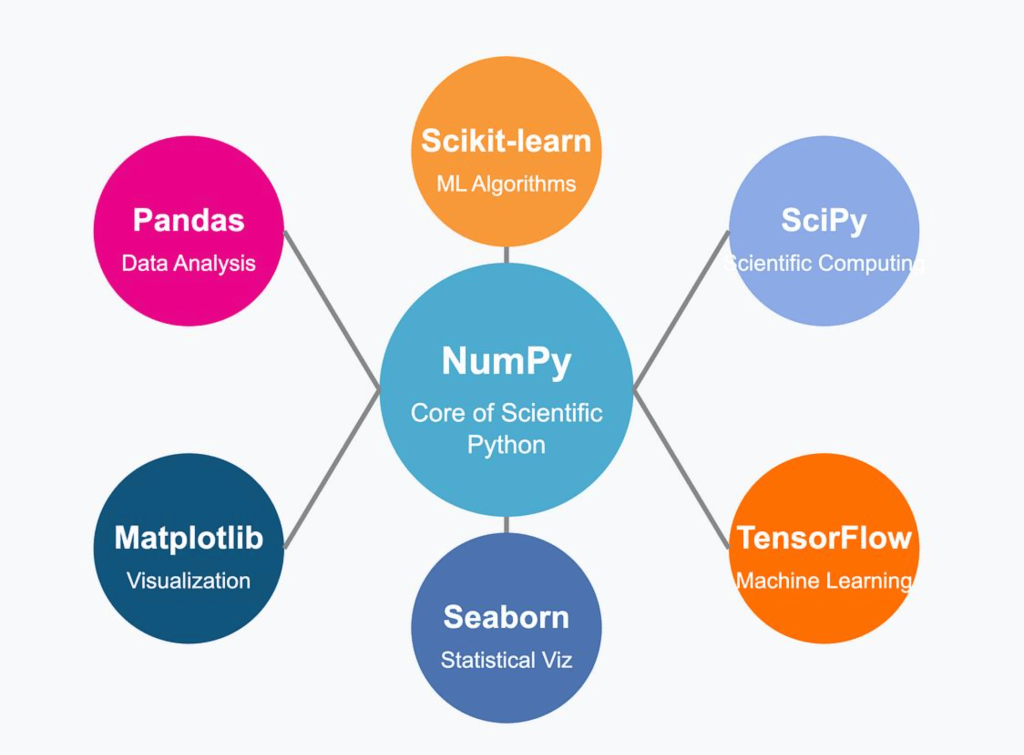
SciPy (Scientific Python) is one of the most important Python libraries for scientific computing, mathematical calculations, engineering, data science, Machine Learning, and AI.
If NumPy helps you work with arrays and numerical data, SciPy provides advanced mathematical and scientific algorithms to process that data.
Why do we use SciPy?
- Solve complex mathematical equations.
- Perform statistical analysis.
- Optimize machine learning algorithms.
- Calculate integrals and derivatives numerically.
- Process audio signals and digital signals.
- Perform matrix and linear algebra operations.
- Interpolate missing or intermediate data points.
- Work with sparse matrices efficiently.
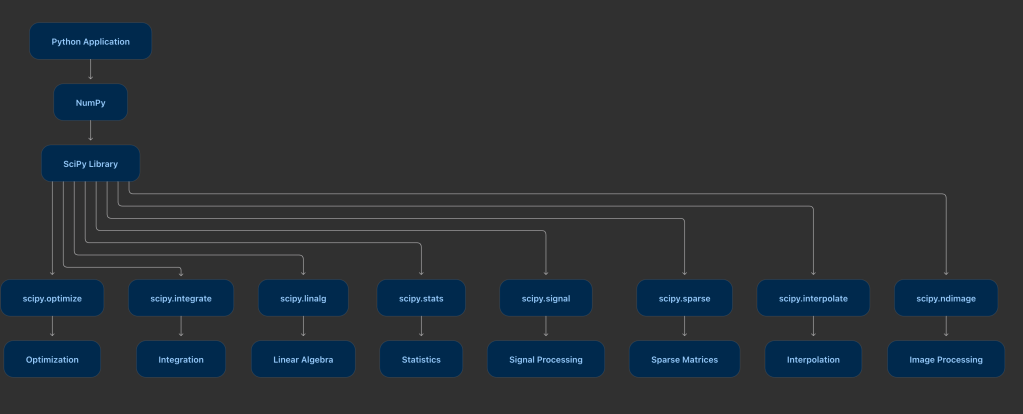
Important SciPy modules
Here are the major modules you should learn.
Local Optimization and Curve Fitting — Numerical Methods and ML for ChE (F22-06-325)
1. scipy.optimize
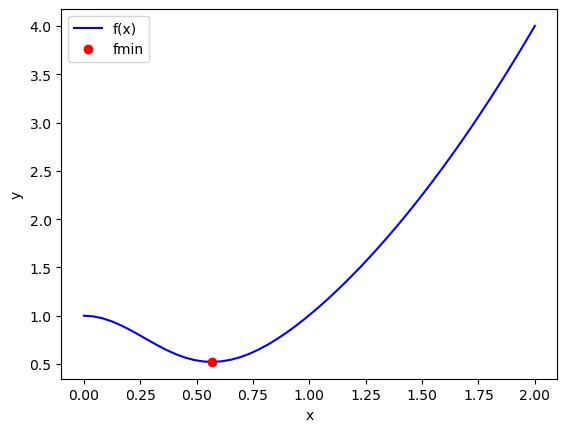
Used to find minimum or maximum values, solve equations, and optimize mathematical functions.
Example: Finding the best parameters for a machine learning model.
Definite integrals and the area under a curve | Maths Solver
2. scipy.integrate
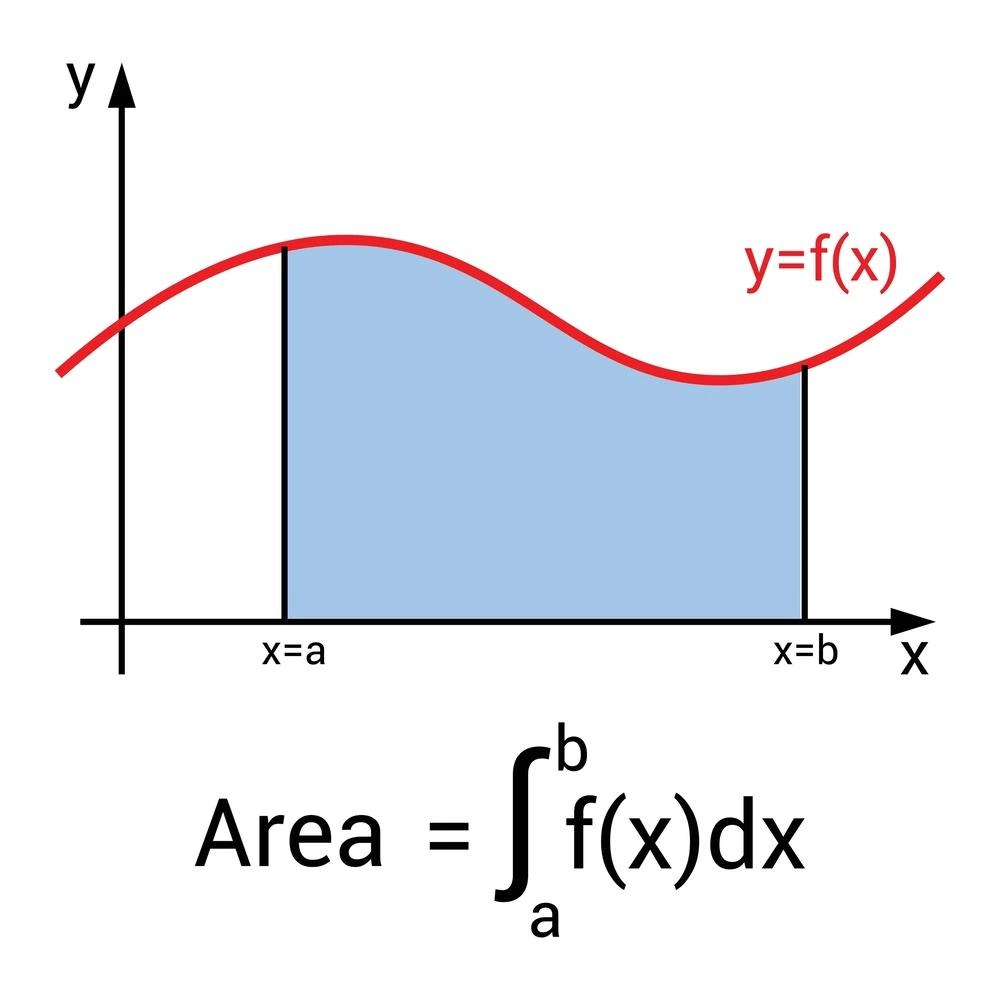
Used for numerical integration and solving differential equations.
Example: Calculating the area under a curve.
AlphaTensor: Una AI que crea nuevos algoritmos
3. scipy.linalg
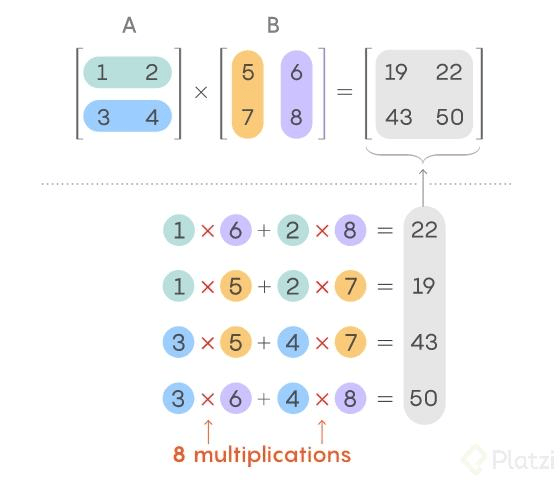
Used for advanced linear algebra operations.
Example: Matrix inverse, eigenvalues, matrix decomposition.
Z-Tests: One-Sample, Two-Sample and Proportion Tests – Interactive
4. scipy.stats
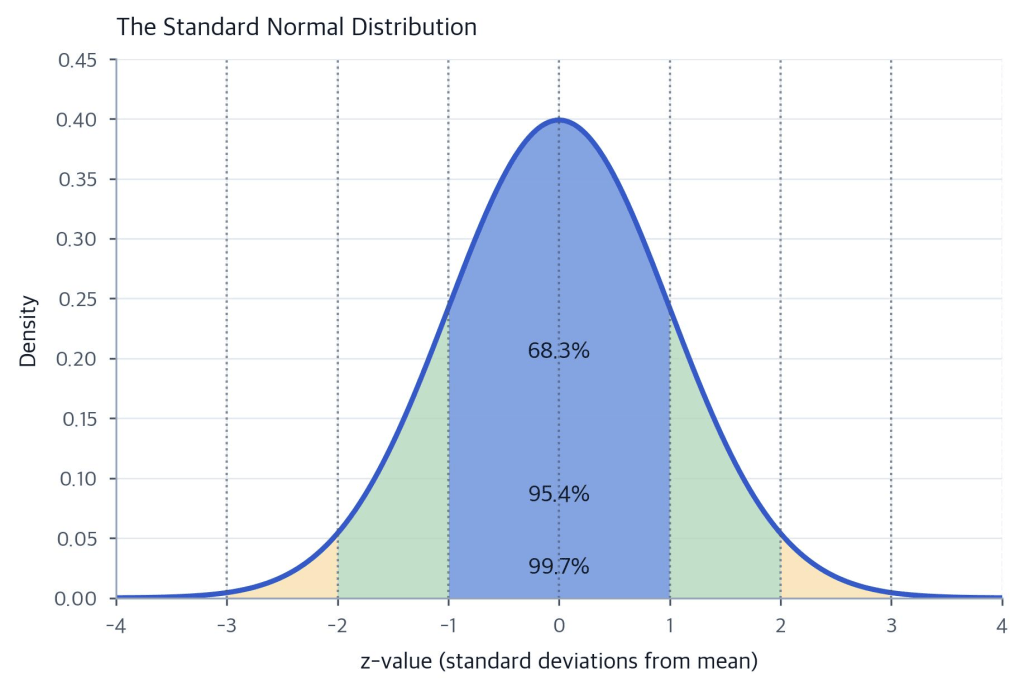
Used for statistical calculations and probability distributions.
Example: Hypothesis testing, probability, normal distribution.
5. scipy.signal
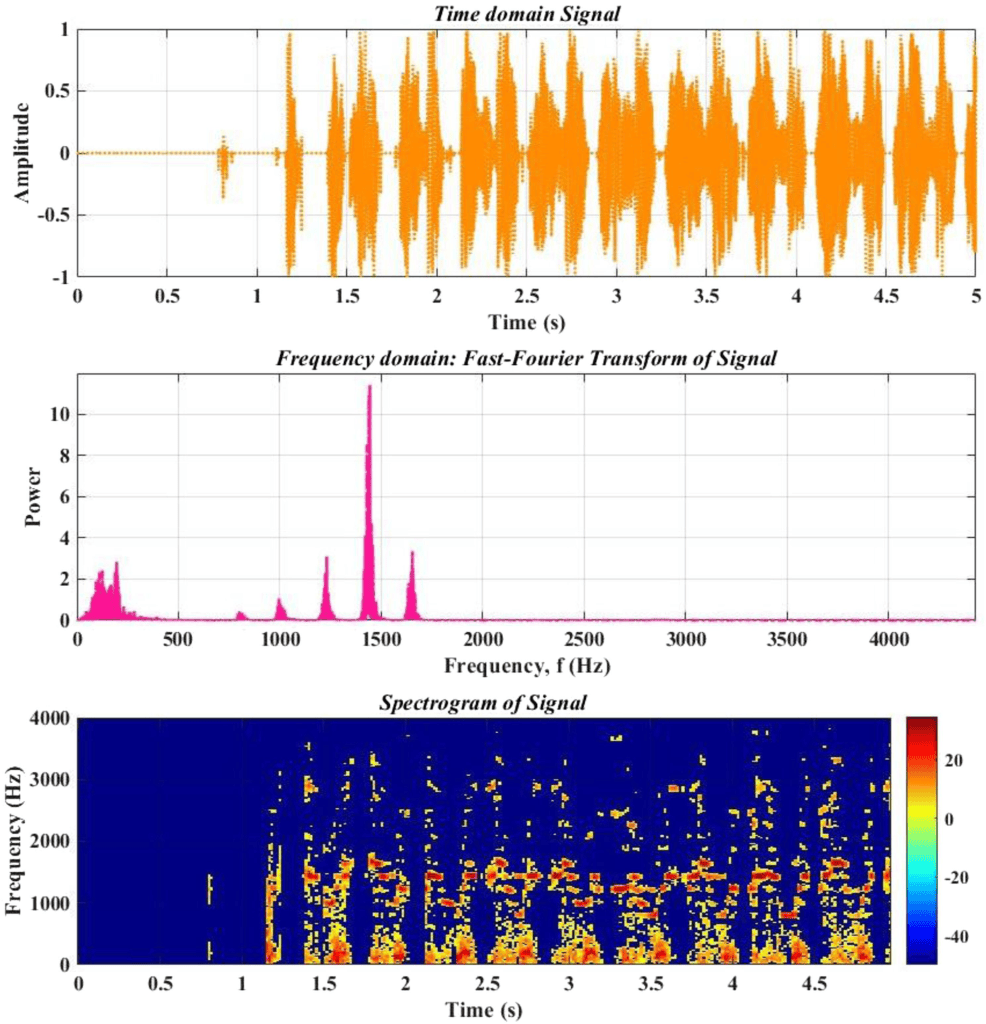
Used for digital signal processing.
Example: Audio filtering, noise reduction, frequency analysis.
6. scipy.sparse
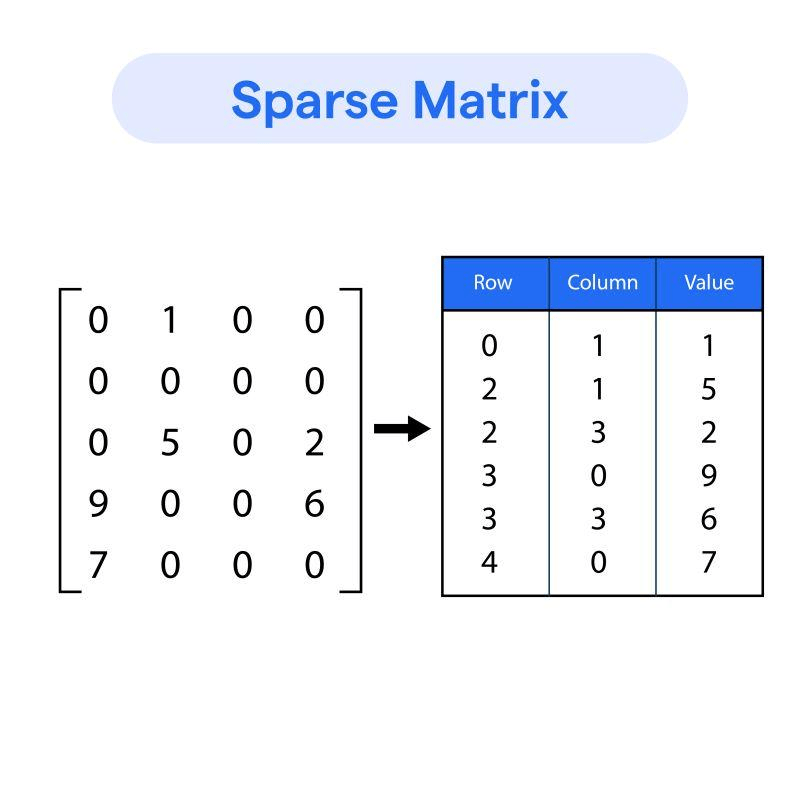
Used to store and calculate large matrices containing mostly zero values.
Example: Large recommendation systems and graph algorithms.
SciPy – Linear 1-D Interpolation
7. scipy.interpolate
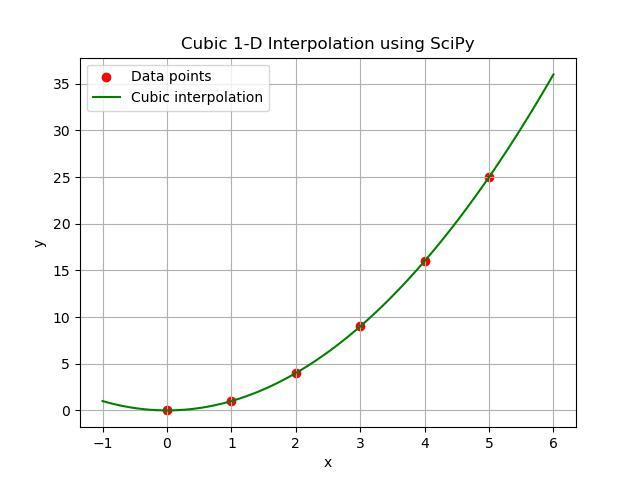
Used to estimate values between known data points.
Example: Filling missing measurements in scientific datasets.
Lecture 2: Image filtering – ppt download
8. scipy.ndimage
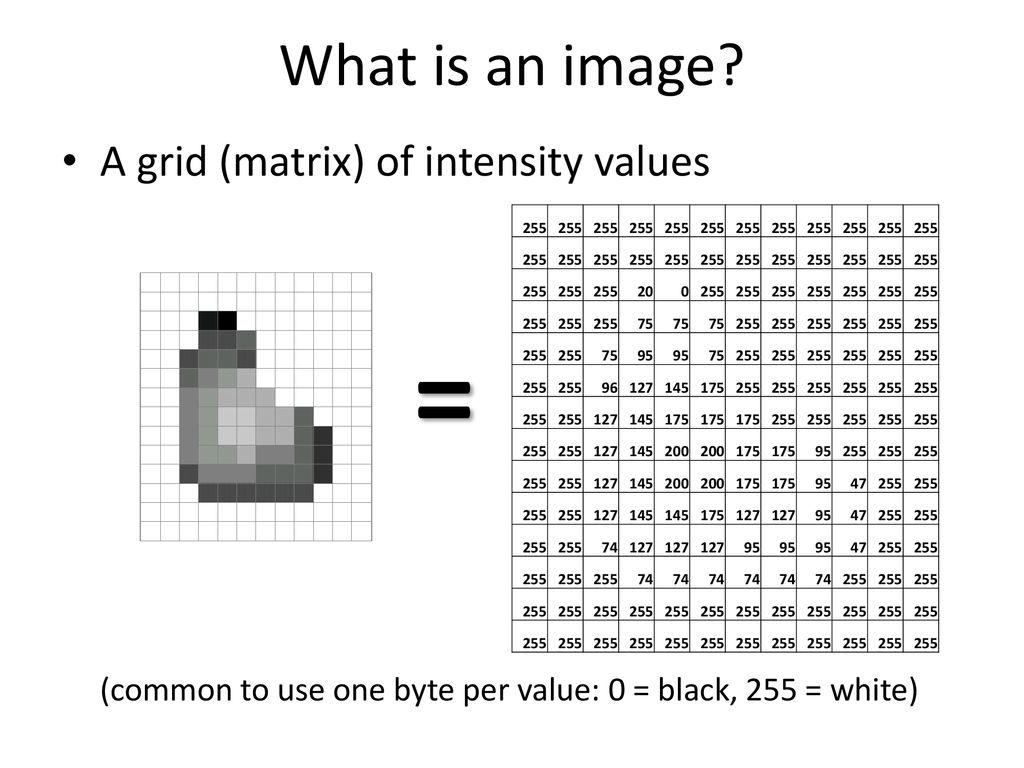
Used for multidimensional image processing.
Example: Image filtering, smoothing, and edge processing.
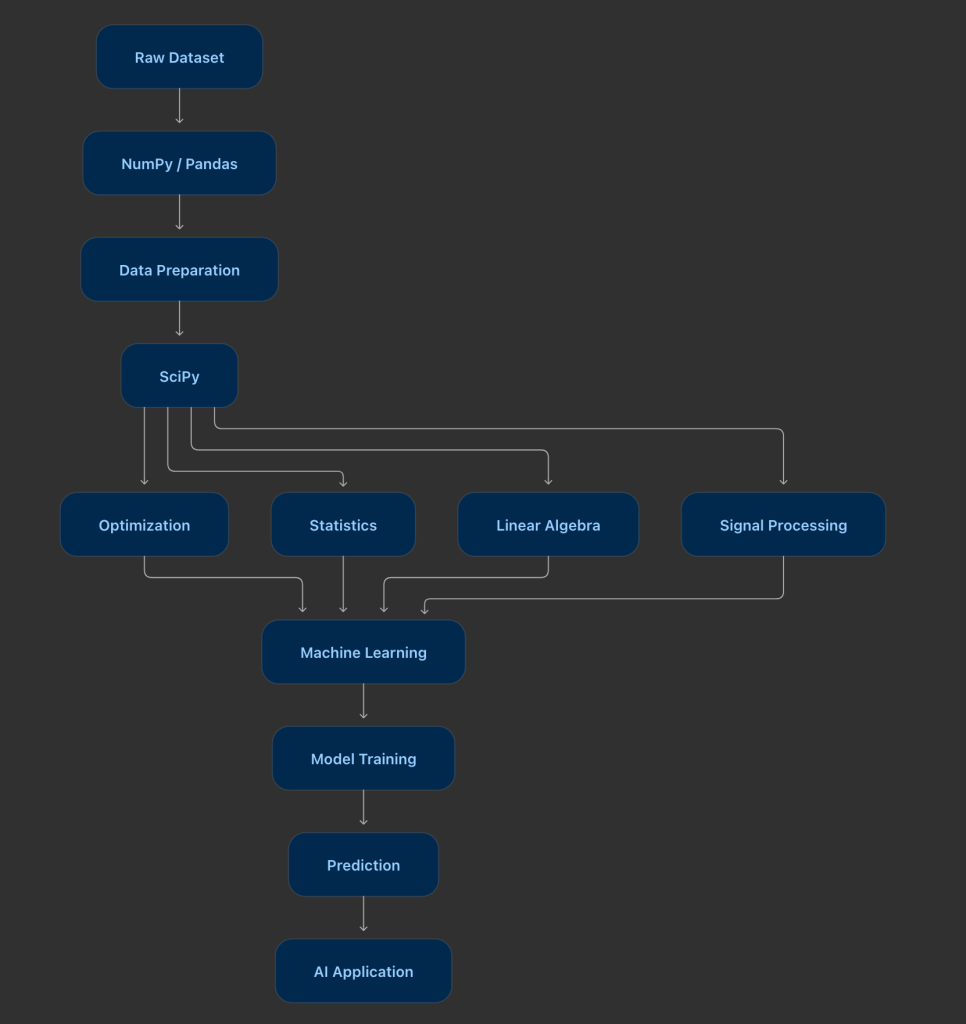
How SciPy fits into AI and Machine Learning